Job Planning, Benchwork & Layout
NIMS
Validates foundational machining knowledge — tool types, cutting concepts, drill setup, hand tools, and round stock layout. The starting credential for any manufacturing program.
CNC Machine Operator
NIMS
Required knowledge for 500,000+ manufacturing jobs. Validates expertise in running CNC machines — one of the most employer-recognized credentials in the field.
Measurement, Materials & Safety
NIMS
Validates knowledge of steel classifications, precision measuring devices, shop safety, and inspection techniques. Often paired with CNC operator prep.
FANUC CNC Certification
FANUC
World-class CNC curriculum based on real machining industry needs, built around FANUC’s Key Concepts teaching approach. Recognized by manufacturers running FANUC controls.
Certified Production Technician (CPT)
MSSC
MSSC awards certificates to individuals who pass any of four Production modules — Safety, Quality, Manufacturing Processes, or Maintenance Awareness. Stackable and grant-fundable.
FANUC Robotics Programming & Operations
FANUC / NOCTI
FANUC provides instructor training and curriculum introducing students to robot applications and programming. Assessed through NOCTI — a nationally recognized technical assessment framework.
Robotics & Automation
Most requested
Smart Automation Certification Alliance
SACA
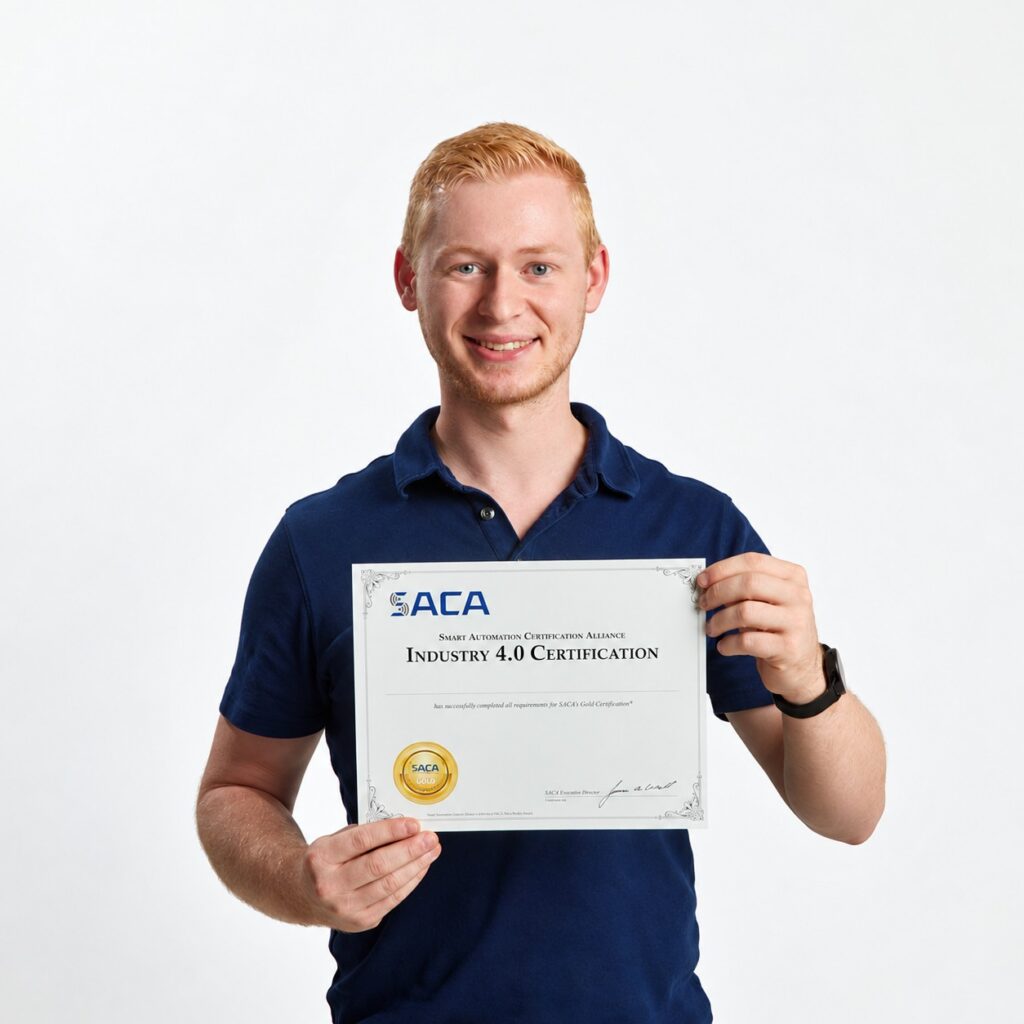
Modular Industry 4.0 certifications designed for a wide range of industries. The primary credential framework for mechatronics and smart factory programs — and the language most workforce boards and employers already use.
Certified Technician – Supply Chain Automation (CT-SCA)
Mssc
Enables students and incumbent workers to gain skills meeting the definition of a supply chain automation technician — bridging robotics, logistics, and manufacturing operations.
Certified Logistics Technician (CLT)
MSSC
Two MSSC logistics courses aligned to MSSC standards, designed to enhance competency across the supply chain workforce.
Certified Forklift Technician (CFT)
MSSC
Certifies individuals in the core competencies of forklift vehicle repair and maintenance — a practical, employer-valued credential for logistics and warehouse programs.
Forklift & Heavy Equipment Operation
NCCER
Credential for heavy-duty vehicle operation — designed for construction and heavy industry applications. Expands the logistics program into site operations.
Electronics Technician
ETA International
A professional association certification (est. 1978) for electronics technicians. Validates core electronics competencies that underpin mechatronics and manufacturing programs.
Computer Networking Technology: CompTIA A+ / Net+
Industry-standard IT certifications for classroom programs: A+ for hardware/support fundamentals, Net+ for networking. Prepares students for IT service and support roles.
Clean Energy
HVACR
Grant Priority
HVAC Excellence
ESCO Group
Stackable HVACR credentials from the group behind EPA 608 testing, with 2M+ credentials issued. HEAT exams validate end-of-program knowledge for high school students; Employment Ready exams certify job readiness in 24 disciplines, from heat pumps and mini-splits to brazing and recovery. Proctor reports double as Perkins documentation.
Automotive Technology Certification
ASE-aligned
Designed to transform students into entry-level automotive technicians in the most efficient manner possible. Aligned to ASE (Automotive Service Excellence) standards — the recognized credentialing framework for the automotive industry.
Clean Energy & Industrial
Manufacturing & CNC
Robotics & Automation
Industrial Technology Maintenance (ITM)
National Institute for Metalworking Skills (NIMS)
NIMS has endorsed Amatrol eLearning as the preferred curriculum for ITM credentials. Covers the industrial maintenance skills required to keep modern manufacturing facilities running.
Clean Energy & Industrial
Most requested
Grant priority
Green Energy — Solar & Wind
NABCEP (North American Board of Certified Energy Practitioners)
NABCEP-aligned training in solar PV and wind technology concepts. Amatrol’s interactive multimedia courses deliver this content. Directly aligned to MassCEC grant funding cycles across New England.
Clean Energy
HVACR
Grant Priority
EPA 608
Required under the Clean Air Act for anyone who services, repairs, or disposes of refrigerant-containing equipment — and to purchase refrigerant. Four types (I, II, III, Universal) never expire, and the updated 2026 exam is now live. The first credential every HVACR student needs.
Clean Energy
Automotive
Grant Priority
xEV Electrical Safety - Level 1
ASE-Aligned
ASE’s high-voltage safety credential for hybrid, plug-in, battery electric, and fuel cell vehicles. Level 1 is for anyone who encounters an EV in the shop. It’s tested online and valid for 5 years.







 program delivers a credentialed student.