
A practical summer checklist for New England CTE Directors: auditing your equipment, lining up funding, sorting out certifications, and getting instructors trained — all before the students walk back in.
Summer is the only time of year a CTE Director gets to actually think. The students are out, the schedule finally gives you some room, and a new fiscal year is starting. That makes this the window to plan the lab your programs really need, not just patch up the one you’ve been limping along with since September.
We’ve spent 45+ years working with schools all over New England, and in that time, we’ve gotten a pretty good sense of what separates the programs that hit the ground running in the fall from the ones stuck scrambling to stock their labs come October. Here’s the checklist we walk through with our partner schools every summer.
Audit What You Have… Honestly
Walk the lab with your instructors and ask three honest questions about every trainer, machine, and kit: Does it still work? Does it teach a skill that employers around here are hiring for? Does it lead to a credential? Anything that strikes out on all three is just taking up space a growing program could put to better use. Make a keep/repair/replace list as you go and take photos of everything… you’ll be glad you have them when grant season rolls around.
Map Equipment to Credentials, Not Catalogs
The strongest Perkins V applications tie every big purchase back to a credential that means something to industry, like the Smart Automation Certification Alliance (SACA) credentials. If you’re aiming students at SACA Industry 4.0 certifications in areas like Robotics & Automation, Electrical, HVAC, or Advanced Manufacturing, your equipment list ought to line up with what those exams test. Amatrol systems, for instance, are built to SACA’s credential requirements and already approved by SACA. And if you’re working toward MSSC’s Certified Production Technician, its four modules: Safety; Quality Practices & Measurement; Manufacturing Processes & Production; and Maintenance Awareness, spell out exactly what your lab needs to cover, and Amatrol lines up with those, too.
Bottom line: don’t shop the catalog first. Start with the credential, then find the gear that gets you there. If that feels like a lot to sort through, that’s what we’re here for. It’s most of what we do all day.
Check the Demand Data for Your Region
Connecticut alone has somewhere around 7,000 open manufacturing jobs right now. Zoom out and the picture’s the same: the Manufacturing Institute and Deloitte figure the country will need as many as 3.8 million manufacturing workers between 2024 and 2033 and about 1.9 million of those jobs could go unfilled. Your advisory board and your superintendent both pay attention to numbers like these, so build your plan around the programs that feed real openings close to home: advanced manufacturing, HVAC, welding, robotics, and industrial maintenance.
The good news is you don’t have to go digging for that data alone. Your regional workforce board has it. In Massachusetts, your local MassHire board is the best place to start. Each of the seven regions puts out labor market blueprints, in-demand occupation lists, top-employer hiring data, and 2-, 5-, and 10-year projections, and a lot of it is free and kept current. A grant narrative or board presentation that points to your own MassHire region’s numbers lands a whole lot harder than a national stat, because it shows the jobs are right here in your community and not somewhere else. (The other New England states have their own versions like Connecticut’s Office of Workforce Strategy and its regional Workforce Development Boards, New Hampshire Employment Security, and so on. Give us a shout and we’ll point you to the right one.) And it works both ways: once a MassHire board knows your program, they start sending students your way and going to bat for your funding.
Line Purchases Up with Your Comprehensive Local Needs Assessment (CLNA)
Perkins V wants your spending decisions to flow straight from your CLNA, so summer’s the time to give it another look. If your CLNA is flagging automation skills gaps but your purchase list is all consumables, you’re going to get questions. Connect those dots now and your fall application practically writes itself.
While you’re at it, get a jump on the other grants that pop up during the year like state workforce and equipment grants, bond money, and awards from foundations or local employers. A lot of these land with short, no-mercy deadlines. If your needs are already documented, your equipment’s already quoted, and your credential mapping is already done, you can turn an application around the same week it’s announced instead of pulling your hair out trying to throw a case together in a timeframe that’s way too tight. The programs that win these things are almost always the ones that did the homework before the deadline ever showed up.
Get Instructors Trained Before the Gear Shows Up
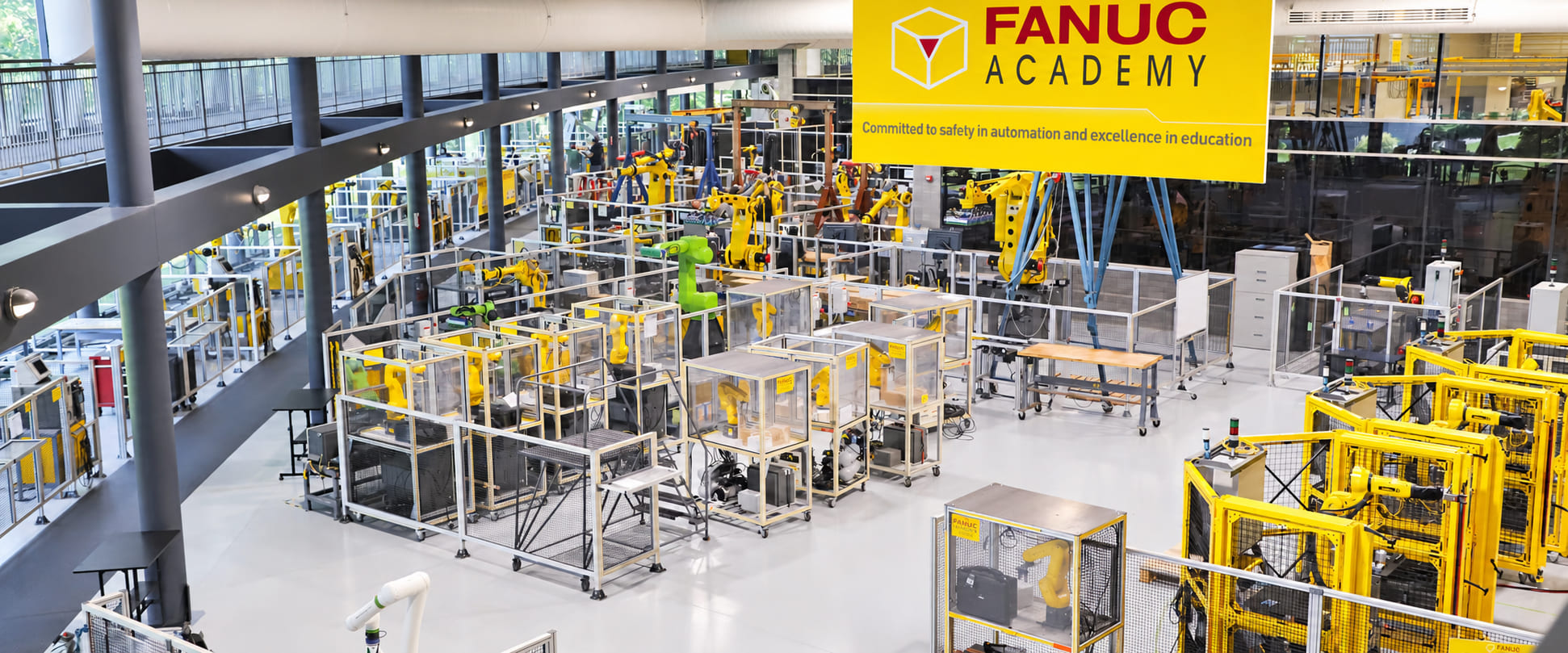
A trainer nobody’s certified to teach on is just an expensive piece of furniture. Build professional development into every major purchase. FANUC’s CERT Program, for example, certifies your instructors to teach robot operation and programming. That’s the step that turns a robot into an actual program. Get that training on the summer calendar so your folks are ready on day one.
We’ve got former classroom teachers on our staff, people who’ve stood at the front of a CTE lab and know the difference between PD that just checks a box and PD that actually changes what happens Monday morning. Good PD isn’t a rep clicking through slides at your instructors for an afternoon. It’s hands-on, it moves at a pace that works for busy teachers, it’s tied to the curriculum they’ll really be teaching, and it leaves them feeling ready instead of buried. When we help plan training around a purchase, that teacher’s-eye view comes built in because we’ve sat in those seats ourselves.
Get Your Quotes in Early — Lead Times Are Real
Lead times on training equipment can run 8 to 16 weeks, so the calendar matters more than people think. A July quote becomes a September install. An October quote becomes a January one. If you want the gear up and running for the fall, the order needs to get moving now.
What It Looks Like When the Plan Comes Together
We recently worked with Mario Sousa and the team at Salem High School in Salem, MA, to build their new Building Property Maintenance program from the ground up. We helped design the space, track down multiple funding sources, and write the grant narratives to win them and we made sure every equipment purchase lined up with industry-recognized credentials and the skills local employers are hiring for. What used to be an empty room now teaches students electrical, HVAC, forklift and skid steer operation, green energy, motor maintenance, and more. Start to finish, it’s the same process this checklist walks through.
“Working with the team at Technical Education Products has been a seamless and professional experience. Their knowledge of technical education, commitment to customer service, and understanding of workforce development needs have helped ensure that our students will have access to high-quality, industry-relevant training equipment for years to come.” — Mario Sousa, CTE Director, Salem High School, Salem, MA
The Bottom Line
An hour or two of planning in July saves you a whole semester of improvising. If you’d like a second set of eyes, we’re happy to come out and do a summer lab walkthrough with you, free of charge, anywhere in New England. We’ll help you build the keep/repair/replace list and line it up with the right credentials and funding.
Ready when you are. Download the printable checklist or drop us a line at info@techedproducts.com and we’ll set up a summer walkthrough.
Sources
- The Manufacturing Institute / Deloitte, “Taking Charge: Manufacturers Support Growth with Active Workforce Strategies” (2024)
- CBIA, Connecticut manufacturing jobs data
- MassHire, regional labor market information and blueprints
- ACTE, Perkins V funding overview
- SACA, Smart Automation Certifications
- MSSC, Certified Production Technician 4.0
- FANUC America, CERT education program